Vicenza: ask what a Palladian building had to do before naming its style
A familiar architectural label can make very different buildings seem like variations of one decorative recipe. Around Vicenza, begin with a building’s documented purpose before comparing the visible forms associated with Palladio. The exercise helps distinguish an urban commission from a villa and makes the stylistic vocabulary serve an explanation rather than replace it.
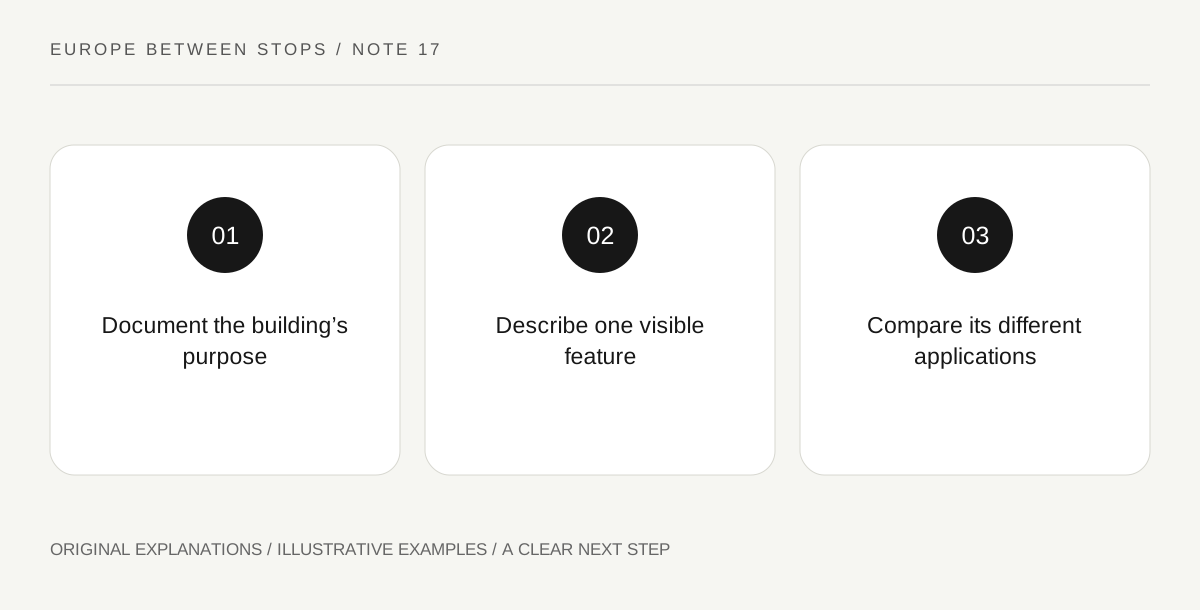
Original explanatory diagram. Read the full method and limitations below.
Use the shared authorship carefully
UNESCO’s property includes Vicenza and Palladian villas across the Veneto, identifying Palladio’s study of classical Roman architecture and the influence of his work. That establishes a broad connection, not an identical program for every building. Select one specifically identified example from official interpretation. Record what the source says the building was intended to do. If you later compare a second example, make its purpose equally explicit instead of choosing it only because the fronts look similar in photographs.
Make a purpose-and-form card
Divide a card into documented use, visible arrangement and unanswered question. In the first field, explain the original purpose in plain language using the interpretation. In the second, describe how the entrance, frontage or volumes are organized. Do not assume that a central entrance proves a particular room arrangement inside. The third field can ask how the exterior relates to circulation or function, while acknowledging that the answer may require a plan or an interior study unavailable during your visit.
Compare a feature without making it a formula
Choose one feature present in the two examples you are studying, such as the relationship of a central element to its neighbors. Explain the resemblance in ordinary words, then identify a difference relevant to the documented purpose. Do not turn a column count or a rough photograph into a universal Palladian rule. Buildings can share a design vocabulary while solving different problems. This comparison becomes more informative when one feature is examined well than when many specialist terms are copied without explaining what they contribute.
Let the question determine any additional visit
A villa elsewhere in the region is a separate practical undertaking, so identify the actual place and current visitor arrangements before adding it. You can also compare authorized official plans or images if the question is primarily analytical. State clearly which evidence you used. The final note should explain one relationship between purpose and form, with limits on what the available evidence can show. That result gives the architectural label substance without claiming that one city walk has covered every building or established a single recipe for the architect’s work.
Illustrative field notebook
Illustrative comparison: a traveler studies an officially identified urban building and a villa through authorized interpretation and images. Each receives a purpose-and-form card. A shared central emphasis becomes more meaningful when the cards show different programs. The notebook labels the image-based evidence honestly and does not imply an interior visit, original measurement or universal rule about every Palladian building.
Questions that come up
Can two buildings share a vocabulary without having the same purpose?
Yes. That is the reason to record program separately. A resemblance becomes more useful when you can explain what remains different.
Must a villa visit be added to understand the comparison?
No. Appropriate official interpretation and images may serve a limited analytical question. Be explicit about the evidence and do not imply access you did not have.
References and scope
These sources support the factual background. Examples and exercises are original illustrative teaching material. References do not imply endorsement.
- UNESCO: City of Vicenza and the Palladian Villas of the Veneto — The city-and-villas property, Palladio’s classical study and architectural influence; specific program evidence is to be read from the identified building’s interpretation.